"And no sun shines in the dark. And no angels ever hear your prayers in the night. When your fears come up your spine. When your life turns upside down... It breaks your heart... When you get crushed in a house of cards... House of cards..." ~The Scorpions
An underdog story always manages to pull at the heartstrings. The idea of someone deemed a loser by society being able to rise above all kinds of adversity thrown their way is the warm and uplifting type of story to make one's heart swell with pride once the underdog has finally achieved their goals. And Running Brave, the story of Native American long-distance runner Billy Mills, is one of the best underdog movies to watch. For it allows one to feel that amazing sense of victory once Billy crosses the finish line to win the gold medal in the 10,000 meter run in the 1964 Tokyo Olympics.
The beginning of the movie really sets the mood of hardship, adversity, and racial prejudice that will permeate the very being of the movie throughout the whole ride. It begins with Billy being brushed off as a possible candidate for a true athlete simply because of the race he belongs to.
The movie could have ended there. It could have been a small blurb of a white man passing off on a Native American athlete simply because he wasn't white. Billy could have quit right then and there and not given any damns about his future as an athlete.
But he didn't stop. He persevered. He fought on. And because of this very perseverance, the audience is treated to quite the whirlwind of an adventure as the movie follows Billy's experiences from leaving his reservation, the only home he had ever known until then, all the way to him competing in the 1964 Tokyo Olympics to take the gold medal.
This movie isn't just about a man following his dreams and overcoming adversity. It doubles as one of the greatest movies out there to help understand the large berth there was (and still is) whenever it comes to one's race. It holds no punches in the sentimental department to force the viewers to reflect on racial inequality and find their own stance on it.
In my most humble opinion, I believe this is one of the greatest movies to find that presents a full package: Interesting characters, a profound and well thought out story-line, a dash of 'Wake Up and Smell the Racist Roses', and a heartwarming ending that will leave anyone smiling like a complete idiot.
I think it's about time we try and find the wisdom to be found in the wolf's glowing eyes. Maybe then we'll finally start treating each other as equals.
Like I have stated before, I've always been a bit of a bookworm. And from that love of reading, I managed to find a love for writing. And it all started by wanting to write down all these creative stories I managed to think up on the boring drives home.
Writing has always been something easy for me. The flow of written words has been a steady one since I began to write for my amusement all those years ago. And it is because of this background in writing for fun that the First Thoughts activity was both easy and therapeutic for me.
So I'm used to jotting down my first thoughts without much hesitation to be able to build up ideas for my stories. Because of my experience in writing just for fun, I found that this project was rather simple, yet mind opening.
The First Thoughts activity comes from Natalie Goldberg's "Writing Down the Bones". It is a simple yet thought-inducing (literally!) exercise for anyone that wants to try their hand at writing. The whole idea of it is to take up ten minutes of your day to force yourself to write down the first things that pop into your mind. The hard part is exactly that. Writing down everything that flits across your mind in those minutes without stopping to fix anything or think about the 'best' way to put the words.
In the beginning, it was somewhat hard to follow the rule of 'Don't Think'. How can someone write their thoughts without thinking? To me it was a bit of an oxymoron. Because, really, how can one not think about what they're going to write?
Eventually, I began to write my thoughts as they came to me, and I believe that this was what the fourth rule was all about. Aside from that rule, the sixth rule: Go for the jugular, gave me a bit of trouble as well. But this was only for the first few days until I managed to get the hang of the journal.
Obstacles are always something to be found in daily life. It's just a normal part of life that cannot be avoided. And one of the obstacles I encountered while completing my First Thoughts Journal was trying to find the time to write in it. All of the schoolwork I had to accomplish aside from this project really cut into my writing time. But through it I learned to juggle all of my responsibilities and make time to complete everything I have to.
The only tools needed for this activity
Throughout the whole project, I noticed that the fluidity of my thoughts became much more pronounced. At the beginning, writing was easy. But the more that I wrote, the more natural jotting my thoughts down became. My words just took on a more flowing nature and felt more honest. And because I was able to become more genuine with my thoughts in this project, I was able to transfer that authenticity of emotions into my narration for my stories and believe that it really has helped me in this respect.
Aside from finally having some clue about how to schedule and prepare for my coming assignments, this project has helped me in my own writing career. Through writing down my thoughts, I have been able to write down some of the ideas I have for different kinds of stories I have yet to begin to write. And even though I wrote a lot before the beginning of this project, I feel like my writing style overall has become more natural, less stiff, and more in tune with the emotions felt by my characters.
This project was one I readily enjoyed because of its roots in the human mind and developing a thought process. It helped me find a new side to my writing style and was the foundation to me finally being able to plan ahead for all the tasks assigned to me by my classes. And I know that I will continue using a journal like this further along the road because of how much it helps.
But, seriously what I enjoyed the most of this project was having an outlet for all my creative thoughts.
Here's the link to the website our professor sent us to for extra information on Natalie Goldberg's activity: First Thoughts
"When Blackie go out at night, all you can see is her glow-in-the-dark teeth."
~ Couldn't Keep it to Myself: Hair Chronicles by Tabatha Rowley
As a dark skinned woman, I have heard taunts like this rather frequently in my life. Often times, they have come from close friends that get an insult as an answer back. It's okay to taunt every once in a while when it comes to friendships because there is an established bond of trust that is above something as petty as someone's skin color.
The problem comes when someone who you don't know starts insulting you for your skin color. It becomes a problem when people become so blinded to who you are as a person because you happen to be a shade darker than them that they begin to harm your life in any manner.
"Racism is the belief that a particular race is superior or inferior to another, that a person's social and moral traits are predetermined by his or her inborn biological characteristics. Racial separatism is a belief, most of the time based on racism, that different races should remain segregated and apart from one another."
The issue of race is a dangerous one. When discussing skin color, I feel like I'm on a tight rope, just a wrong move away from committing a serious mistake and getting scolded. I'm sure many other people feel this very way. When it comes to an issue as sensitive as racism, there really are no winners in any kind of argument. There is no black and white, no matter how skin color is perceived. There are only blurry shades of gray that change depending on a person's life and personal situation.
It is a shame that in this modern era, there are still issues concerning something as superficial as skin color. It is heart-breaking to hear a song like 2pac's Changes, which was first released on October 13, 1998.
I want this to sink in for a second. 1998. More than eighteen years ago. And it's almost two decades later and the inequality problems this man rapped about are still as clear today as they were when this song first came out.
It seems like every time I wake up, there's a new story on racism, inequality, police brutality, unfairness, and more on the news. There are thousands of experts on this social scurr and an innumerable amount of articles, essays, and thesis works that all speak about how humanity has formed some erroneous and almost ridiculous standards because of skin color. These are just a few I found:
Not only are there all kinds of scientific articles from people that know what they are talking about, but there are countless stories detailing the danger of racism and discrimination. Tabatha Rowley's Hair Chronicles is one of those stories that detail just how someone can be treated simply because they happen to have darker skin color. It's a very good story to read that speaks of more than just race, though, for there are also themes of substance abuse, child abuse, and class inequality.
We are not an ignorant civilization. Humanity has surpassed the Stone Age. Then why do we continue to hear about so much ignorance? Why do we have to wake up every day to a new story about how some innocent black kid was shot down because the police didn't give him the benefit of the doubt? Why do I have to wake up every day and wonder if that will ever be me or my family?
A couple of weeks ago, I was exposed to two different kinds of expositions about drunk driving. The first, a short yet gut wrenching book titled "Long Drive Home", by Will Allison. And the second was a drunk driving exhibit created by a group named Fiesta II in the Lázaro Library of the Rio Piedras Campus of the University of Puerto Rico.
Most of the exhibit dealt with the pain and misery brought on by the meaningless deaths caused by one irresponsible driver and it was rather impacting to see the effect that they cause with one bad decision.
The book itself dealt with a man trying to live with the one bad decision he made after he had had a bad day and was heart wrenching in its own right.
But, the common denominator to find in both these things I experienced was that of alcohol.
Alcohol. A drink or two aren't supposed to hurt too much. The problem to be found with alcohol is when we allow it to consume our lives. When we decide to hand ourselves over to the vice, we allow subsequent decisions we will make to be wrenched out of our own hands.
We're always being told about how bad alcohol is for you. We're always told unprotected sex will, without a doubt, change our lives in an irreversible manner. Yet we still hear about car accidents with drunk drivers at the helm and we still hear about how this person gave this other one some kind of STD by refusing to tell them about their positive status.
Have you ever wondered just why a person is driven to alcohol for comfort?
Now, don't get me wrong. I'm not saying that we should all drive drunk. And I'm not saying that every single drunk driver has an understandable reason behind drinking.
But what I am saying is that not every drunk driver is a bad guy and we can't really generalize.
The poster in the exhibit that most caught my attention was that of how, through Neuro-Linguistic Programming, some psychologists hope to help alcoholics with their addiction. Without fully talking about it, the exhibit gave a different look at drunk driving at its causes. It showed that some of these drunk drivers are actually alcoholics that are suffering from a disease that is extremely hard to cure.
There's a song I identify with a lot. It's called Death of Me by City and Colour. Give it a listen. It may just give you a new perspective on why some people drink.
By the end of the song, the singer decides to not drown his sorrows in alcohol. But the first half of the song is an almost optimistic train of thought about how all of his problems may just be solved by drinking them away. He says: "People love to drink their sorrows away. Sometimes I feel that I'd be better off that way."
The turning point of the song is this set of verses:
"Finally I could hope for a better day. No longer holding onto the things that cloud my mind. Maybe then the weight of the world wouldn't seem so heavy... But then again, I'll probably always feel this way."
In the end, the singer ends up deciding on not drinking but doesn't end up saying much about it other than he'd probably always be miserable, even if he drank. It's a rather pessimistic way of seeing any given situation, but when one falls to addiction, they're usually at their most vulnerable.
And this vulnerability brings me to "Long Drive Home".
Glen Bauer was a man that lost everything in a short period of time because if his one angered mistake. His marriage crumbled, his relationship with his daughter became strained, and he was under investigation by the police because of Juwan's untimely death.
It really doesn't surprise me that he ended up taking some comfort in alcohol.
As I read the book, I began to ask myself if he'd count as a true alcoholic. But the fact is that he still had a job and- no matter how strained- still maintained his relationships.
So I read these two posts about 'functioning alcoholics':
And I came to the conclusion that Glen was well on his way to becoming a 'functioning' alcoholic. For he shows signs of alcoholism, but still doesn't show them to a degree that would be considered a true sickness.
Human beings can't always be strong. Sometimes we have to break apart so we can build ourselves back up. And, sometimes, during that rebuilding process, we're just too weak and end up succumbing to our weakness and seeking comfort in something that might help take away the pain.
Through the book, the song, and the exhibit, I was able to solidify my belief that not every drunk driver is the big bad wolf.
Alcoholism is a disease that chews one up, drains them of every single good fiber in their body, then spits them back out as a husk of the person they once were. And it is a disease that should be cured, not criticized and villainized.
I've always been a bit of a book nerd. When I was in elementary school, I was that one odd girl that would much rather read a book during recess than go out and play with the other kids. Because of this, I've had the opportunity to live a hundred different lives, learn a rather broad vocabulary, and learn how to deal with all kinds of problems in all kinds of imaginative ways.
Since I could read, I have been a book lover and I don't see that love dwindling in the near future.
But I am very much aware of the fact that not everyone shares my passion for books. Not everyone can stay somewhat stationary for hours on end to be able to finish a book. Most kids I know of just can't be bothered with reading a book for fun because of the trauma instilled into them from being forced to read books as part of the school curriculum.
But there is a misconception about what a true education is. Most hold school diplomas and good grades in great regards. But the fact of the matter is that a true education isn't the kind that can only be taught through books, homework, and presentations in a classroom. That's just half of it.
In class, we read an article titled "What True Education Should Do" by Sydney J. Harris. And, as we read this, I couldn't help but begin to think that, while the article tells us what education should do, it doesn't truly shed too much light on what a true education is.
Merriam Webster's definition of education is: "The action or process of teaching someone especially in a school, college, or university."
This is a very simple and underwhelming definition that doesn't give the act of educating much justice. Acquiring knowledge and, through this, being educated is so much more than just sitting in a classroom and having information crammed into someone's head.
As a human being grows, they acquire all kinds of knowledge. Formal education is the one taught in classrooms, the kind that sometimes leaves students overly stressed and harrowed because of how extremely daunting it can sometimes become. Because of the excess work and high demand for getting good grades, sometimes kids end up not even wanting to go to school and begin to see it as an enemy. And this is the kind of education students scorn.
But, fret not, school haters! A formal education is only half of the whole that makes up a true education!
Informal education is the kind that we acquire unknowingly through our experiences all throughout our lives. We gain this knowledge from friends, family, random strangers on the street, television shows, video games... We gain it from anything, really. And we don't even notice that, on a day to day basis, we learn new things that could eventually be used in all kinds of situations we might come across in our lives.
Education isn't just the topics taught to students from a rigid curriculum to try and ensure good grades. It is a combination of both formal and informal education that helps shape a child into a knowledgeable and productive member of society.
When speaking of education, we can't just think of stuffy classrooms and crammed school hallways. We must open our minds to the fact that we learn a little something every day. And this is the knowledge taught through the School of Life.
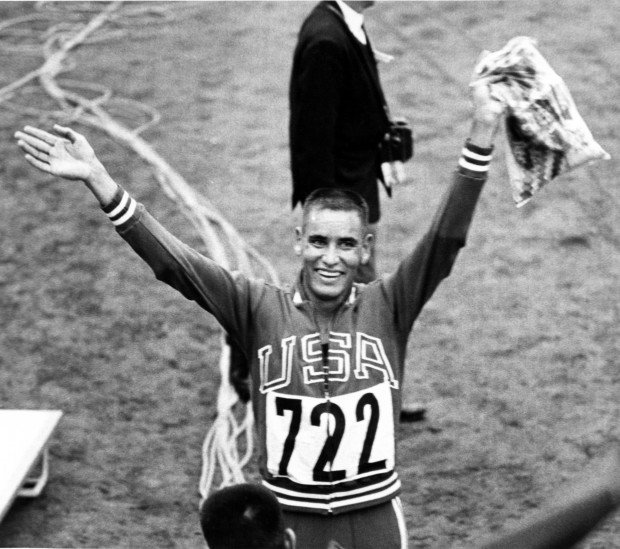 An underdog story always manages to pull at the heartstrings. The idea of someone deemed a loser by society being able to rise above all kinds of adversity thrown their way is the warm and uplifting type of story to make one's heart swell with pride once the underdog has finally achieved their goals. And Running Brave, the story of Native American long-distance runner Billy Mills, is one of the best underdog movies to watch. For it allows one to feel that amazing sense of victory once Billy crosses the finish line to win the gold medal in the 10,000 meter run in the 1964 Tokyo Olympics.
 The movie could have ended there. It could have been a small blurb of a white man passing off on a Native American athlete simply because he wasn't white. Billy could have quit right then and there and not given any damns about his future as an athlete.


